

Measure First: Men's Relaxed vs Athletic Fit: 18–20 in Leg Opening
Relaxed fit adds room through the seat and thigh with a straight, wide leg opening built for comfort. Athletic fit keeps that same thigh room but tapers sharply below the knee for a trimmer ankle. If your thighs are your biggest measurement, start with athletic fit. If comfort and easy movement matter more than a fitted leg, grab relaxed fit first.
TL;DR:
- Measuring the leg opening is more accurate than relying on fit labels when choosing between relaxed and athletic fits.
- Relaxed fit jeans have a wider leg opening, typically between 18 and 20 inches, and do not taper below the knee, making them more casual and comfortable.
- Athletic fit offers room at the thigh while tapering sharply below the knee, with most brands adding stretch denim for better movement.
- Most brands do not standardize fit terminology, so taking precise measurements of the thigh, knee, and calf is essential for an accurate fit.
- Hemming or tapering relaxed-fit jeans is often necessary to avoid excess fabric at the ankle, but exchanging for athletic fit can be faster for larger adjustments.
Table of Contents
- Relaxed vs Athletic Fit: The Measurements That Actually Matter
- What Relaxed Fit Really Means
- What Athletic Fit Really Means
- Which Body Type Fits Which Cut (And How to Measure)
- Styling Relaxed and Athletic Fits the Right Way
- Fixing the Fit: Hemming, Tapering, and When to Just Exchange
- Why Measurements Beat Marketing on This One
- Finish the Look With a Gulf of America Hat
- Sources
- FAQ
Relaxed vs Athletic Fit: The Measurements That Actually Matter
Fit names are marketing shorthand, not a fixed industry standard, so two brands can call very different cuts “athletic.” That’s exactly why measurements beat labels every time you shop, a point Wikipedia’s overview of jeans history backs up when it notes fit terminology varies brand to brand. Here’s what actually separates relaxed fit from athletic fit on the tape measure.
- Seat and thigh: Both fits add room here. Relaxed fit is looser overall through the seat and thigh, according to Lee’s denim fit glossary, while athletic fit adds that same thigh space specifically to accommodate muscle, per American Eagle’s breakdown of athletic fit jeans.
- Knee and leg opening: This is the real tell. Relaxed jeans often run 18 to 20 inches at the leg opening, while athletic or tapered fits typically drop to 15 to 16.5 inches, based on ranges cited in Men’s Wearhouse’s guide to jeans fits.
- Taper: Relaxed fit stays roughly the same width from knee to ankle. Athletic fit narrows noticeably below the knee, which is what gives it that modern, trim silhouette.
- Rise: Relaxed fit usually sits with a longer rise for a more forgiving fit through the front. Athletic fit rise varies more by brand.
- Fabric cues: Look for elastane content on the tag. Stretch denim (even 2% to 3%) lets an athletic taper move with your leg instead of fighting it.
When you’re scanning a product page, check the leg opening measurement before anything else. It tells you more than the fit name ever will.
What Relaxed Fit Really Means
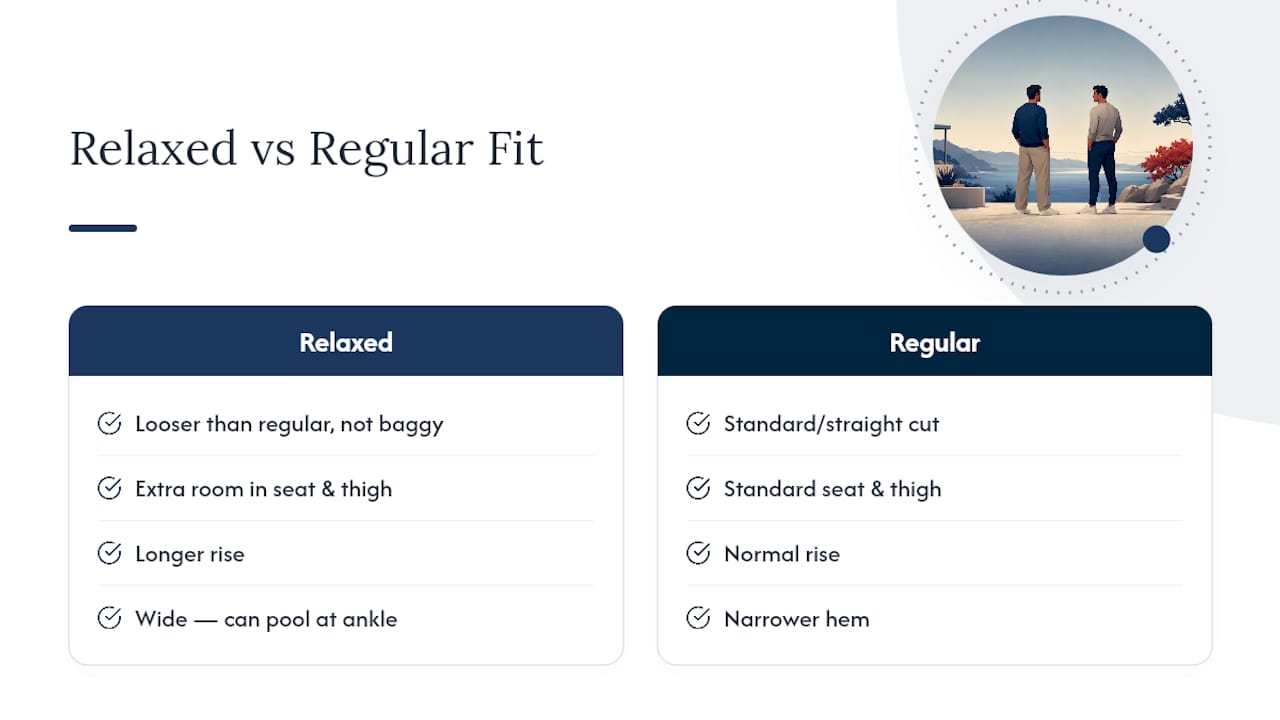
Relaxed fit is looser than a regular or straight cut, but it isn’t meant to be baggy. It adds extra room through the seat and thigh and typically carries a longer rise, according to Lee’s fit glossary. Picture a pair that never pulls when you squat, sit, or bend to tie your boots.
That extra fabric has a tradeoff, though. Relaxed pants generally have a wide leg opening that can pool at the ankle if you don’t hem or taper them. Retail fit guides consistently flag this as the most common relaxed-fit mistake, per Men’s Wearhouse.
Relaxed fit earns its keep in a few clear situations: physical work where you’re bending and reaching all day, casual weekend wear, or simply when you want pants that never feel restrictive at the table.
Pro Tip: If you go relaxed, plan on a trip to the tailor. A quarter-inch too much fabric at the ankle is the difference between “comfortable” and “sloppy.”
What Athletic Fit Really Means
Athletic fit keeps the roomy seat and thigh of relaxed fit but tapers hard below the knee, landing you back at a slim, controlled ankle opening. American Eagle describes it as extra space at the thigh and seat combined with a taper for a more streamlined lower leg, a shape built specifically for men who don’t fit into slim or straight cuts comfortably.
The difference from other fits comes down to where the room lives:
- Vs. slim fit: Slim fit is narrow everywhere, including the thigh. Athletic fit is only roomy where you need it.
- Vs. straight fit: Straight fit runs the same width from hip to ankle. Athletic fit narrows below the knee instead of staying flat.
- Vs. regular fit: Regular fit splits the difference but rarely accounts for muscular thighs the way athletic fit does.
This cut works best for men with muscular legs from lifting, running, or cycling, and for anyone who wants a smart-casual look without buying two sizes up just to fit their thighs. Brands increasingly build athletic fit with a touch of stretch, since rigid denim tapered tightly below the knee can restrict movement, according to AE’s product notes. For a deeper look at how tapering is engineered for performance builds, RNK Apparel’s breakdown of athletic cut design is worth a read.
Which Body Type Fits Which Cut (And How to Measure)
Skip the guesswork and take four measurements before you shop. This takes under two minutes with a soft tape measure and saves you a return shipment.
- Waist: Measure where you actually wear your pants, not where the label says the waistband should sit.
- High hip: Wrap the tape about four inches below your natural waist, where a lot of relaxed-fit room gets used.
- Fullest part of the thigh: Stand naturally and measure the widest point. This number decides more than any other measurement.
- Knee and calf: Measure just below the kneecap and at the widest point of your calf.
Once you have those numbers, the choice gets simple. If your thigh measurement runs noticeably larger than your calf, athletic fit will fit cleanly without buying up a full size. If your waist and thigh are proportionally similar, or comfort matters more than a tapered leg, relaxed fit is the better call. When your waist size fits but your thighs are tight, size by the thigh and plan to take in the waist with a belt or light tailoring instead of the reverse.
Styling Relaxed and Athletic Fits the Right Way
The fit does half the work; the rest is proportion. Get that wrong and even a perfectly fitted pair of athletic pants can look sloppy.
- Relaxed fit: Pair with structured casual shirts, flannel, or a canvas jacket. Boots or chunky sneakers balance the wider leg without looking oversized.
- Athletic fit: Go with fitted or slim-cut shirts and low-profile sneakers. The point is a clean line from waist to ankle, so avoid bulky tops that hide the taper.
- Layering: A jacket that hits mid-hip keeps relaxed fit from looking baggy top to bottom.
- Hem length: Athletic fit should break just above the shoe. Relaxed fit can sit slightly longer, but never past where it bunches at the ankle.
The quickest way to sabotage either fit is wearing it a size too big up top. Relaxed pants under a boxy shirt reads unfinished; athletic pants under one hides the exact cut you paid for.
Fixing the Fit: Hemming, Tapering, and When to Just Exchange
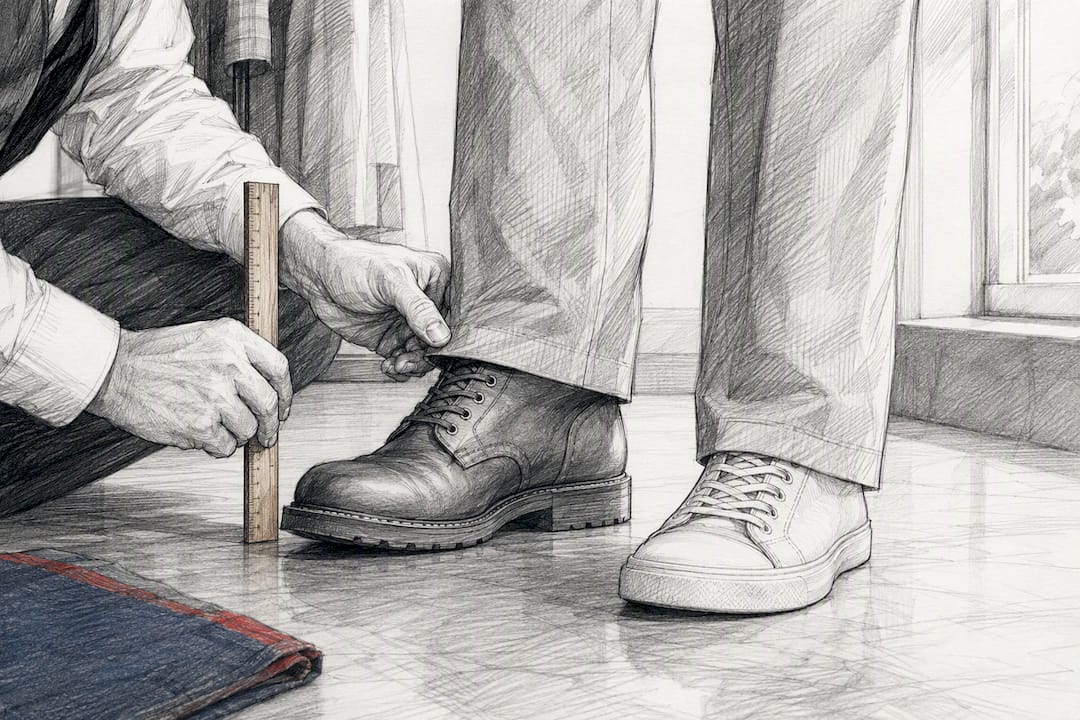
Hemming is cheap, fast, and solves the most common relaxed-fit problem: too much fabric pooling at the ankle. Most tailors charge a modest fee and turn it around in a few days. Tapering the leg is a bigger job, since it means resewing the inseam, and it only works well on fabric with some give.
Rigid, non-stretch denim resists tapering because there’s no flex to redistribute; stretch denim tapers more cleanly and holds its new shape longer. If a relaxed pair needs more than two inches taken in through the thigh, exchanging for athletic fit is usually faster and cheaper than asking a tailor to rebuild the leg.
Pro Tip: Always try pants on with the actual shoes you’ll wear them with. A hem that looks right with sneakers can look noticeably off with boots.
Why Measurements Beat Marketing on This One
Erik here. After digging through fit guides across half a dozen brands for this piece, one thing became obvious: no two companies define “athletic fit” the same way. A 16-inch knee opening at one brand is a 17.5 at another. That’s not a flaw in the system, it’s just how denim has always worked.
The practical takeaway is simple. Measure your thigh and knee before you buy anything, and treat the fit name as a starting point, not a guarantee. This straightforward standard is applied across various denim lineups, often backed by a 30-day money-back guarantee and numerous customer reviews from teams that stand behind their products.
— Erik
Finish the Look With a Gulf of America Hat
Getting the pants right is half the outfit. A well-chosen hat pulls the rest together, whether you’re in relaxed jeans for a weekend project or athletic-fit pants for a smart-casual look around town. Gulfofamerica built its hat lineup for exactly that kind of everyday wear.

The Gulf of America Hat Embroidered Patch Mesh Back Trucker Hat leans casual, with a breathable mesh back that suits relaxed-fit outfits and outdoor days. For a sharper, athletic-fit look, the Gulf of America Trucker Hat – Patriotic Snapback Baseball Cap adds a cleaner line that matches a tapered leg without competing with it. Both come with a 30-day money-back guarantee and support from a team with many positive customer reviews. Browse the full hat collection and pick the one that matches the fit you’re building your outfit around.
Sources
- Men’s Jeans: The 4 Fits to Know
- Complete Guide to Jeans Fits | Lee
- Get to Know: Men’s Athletic Fit Jeans
- Jeans — Wikipedia
FAQ
Who Should Wear Athletic Fit Pants?
Men with muscular or larger thighs relative to their calves get the most benefit, since athletic fit adds room at the seat and thigh while tapering below the knee for a cleaner ankle line, per American Eagle’s fit guide.
Is Athletic Fit Bigger Than Straight Fit?
Athletic fit is roomier at the thigh than straight fit, but it tapers below the knee, while straight fit keeps a consistent width from hip to ankle, according to Lee’s fit definitions.
Is Relaxed Fit Tighter Than Straight Fit?
No, relaxed fit is looser than straight fit through the seat and thigh, with a longer rise built in for extra comfort, based on Lee’s denim glossary.
Who Should Wear Relaxed Fit Jeans?
Relaxed fit suits men who want comfort and freedom of movement over a fitted leg, including anyone doing manual work or dressing casually, though a leg opening of 18 to 20 inches often needs hemming to avoid excess fabric at the ankle, per Men’s Wearhouse’s fit guide.