

Everyday American Tees in Under 30 Minutes: Patriotic T Shirt Ideas
The three easiest, highest-impact patriotic t-shirt ideas are a distressed vintage flag, a small minimalist chest patch, and a funny cookout graphic. Each one takes under 30 minutes to design and works with beginner-friendly methods like heat transfer vinyl or stencil paint. The rest of this guide walks through the DIY steps, the right blanks to buy, and personalization tricks that turn a holiday shirt into something you’ll actually wear in October.
TL;DR:
- Simple patriotic designs like distressed flags or minimal chest patches can be created in under 30 minutes using heat transfer vinyl or stencil paint.
- Choosing the right shirt blank involves balancing factors such as weight, fabric type, color, and intended use, especially for outdoor summer wear.
- DIY printing methods vary from stencil and fabric paint for small projects to DTG for detailed images, with each method having different setup and curing times.
- Personalization, such as adding family names or service branch symbols, significantly increases the shirt’s wearability beyond just holiday use.
- Washing and care routines must suit the chosen print method to preserve design quality, with cold water and air drying recommended for longevity.
Table of Contents
- Patriotic T Shirt Ideas Sorted by Style and Skill Level
- Choosing the Right Blank Shirt for Your Design
- DIY Printing Methods: Which One Fits Your Project
- Personalizing a Patriotic Shirt for a Specific Person
- Wearing Patriotic Shirts All Year, Not Just on the Fourth
- Why Gulf of America’s Track Record Matters Here
- How to Wash a DIY Patriotic Shirt Without Ruining It
- What Patriotic Shirt Supplies Actually Cost
- Sourcing Patriotic Patches, Buttons, and Paint
- A Few Things I’d Tell You Before You Buy a Single Yard of Vinyl
- Complete Your Look with Gulf of America Accessories
- Sources
Patriotic T Shirt Ideas Sorted by Style and Skill Level
Most patriotic shirt ideas fall into a handful of proven categories. Picking the right one for your skill level and time budget matters more than picking the “best” design, since a mediocre execution of a great idea beats a perfect execution of a boring one.
Classic flag treatments. A distressed, cracked-paint American flag reads as vintage rather than costume. A small pocket-sized flag on the left chest is subtler and works for daily wear. A state-shaped flag graphic, your state outline filled with stars and stripes, gives regional pride a patriotic twist.
Eagle designs. A small eagle silhouette over the heart is understated enough for a work shirt. A large, detailed eagle chest portrait (talons out, wings spread) makes a bolder statement piece for a parade or tailgate.
Fireworks and skyline graphics. Fireworks pop hardest on dark fabric, since the color contrast does the visual work for you. Pair a city or mountain skyline silhouette underneath the burst for depth.
Food and cookout humor. Think “Grill Sergeant,” a hot dog wearing sunglasses, or “Freedom Tastes Like Barbecue.” This is the category where a slightly corny slogan actually helps sales, according to Printify’s 2026 trend research, which flags funny tees and family-matching designs among the top-performing 4th of July styles.
Vintage Americana and faux tour dates. A “Freedom Tour 1776” layout, styled like a classic rock concert shirt with a tour-date list on the back, is one of the more clever ideas circulating for 2026, which points to vintage marks and heritage-styled graphics as strong picks for younger buyers who want subtlety over stars-and-stripes overload.
Minimalist chest patches or sleeve markers. A small flag, star, or eagle icon on the sleeve or breast pocket is the most wearable option on this list, since it reads as a detail rather than a costume.
Veteran and profession tributes. A thin blue, red, or gold line through a flag honors law enforcement, firefighters, or gold-star families. Keep these respectful: simple line work, no cartoonish elements. Merch Titans’ research on patriotic apparel found that combining patriotism with a specific identity, like profession or military branch, consistently outperforms generic flag graphics for repeat wear.
Family and group matching sets. “Cookout Crew 2026,” a shared last name with the year, or matching star graphics in different sizes for kids and adults. These work well for reunions, block parties, and Veterans Day gatherings alike.
- Stencil and fabric paint: best for the distressed flag or state-shape design
- Heat transfer vinyl (Cricut): best for eagle silhouettes and clean text like “Grill Sergeant”
- Direct-to-garment printing: best for detailed, full-color eagle portraits or fireworks scenes
- Embroidery: best for small chest patches and veteran tribute designs that need to survive years of washing
Pro Tip: Sketch your design at actual shirt size before cutting vinyl or spraying paint. A logo that looks great at 3 inches on your screen often looks cramped or oversized once it’s on fabric.
Choosing the Right Blank Shirt for Your Design
The blank you pick affects comfort, print quality, and how the finished shirt looks. A heavyweight cotton tee holds screen print ink better, but it’s the wrong call for a July cookout in Texas.
- Budget bulk orders (family reunions, group events): mid-weight 100% cotton tees keep costs down and print cleanly with HTV or DTG.
- Premium personal wear: ring-spun cotton or cotton-poly blends feel softer against skin and hold shape after repeated washing.
- Vintage, distressed look: garment-dyed or pre-washed blanks give you that broken-in feel immediately, without months of actual wear, a technique UberPrints recommends for anyone chasing an authentic worn-in look.
- Hot-weather events: lightweight tanks or raglan tees breathe better at outdoor parades and cookouts.
Color matters as much as fabric weight. Fireworks and multi-color scenes need a dark background (navy, black, charcoal) so the colors pop. Distressed flags and faded vintage designs usually look more authentic on lighter, sun-bleached tones like heather gray or sand.
Wash prints in cold water, inside out, and skip the dryer’s high heat setting to keep vinyl and screen print ink from cracking early.
DIY Printing Methods: Which One Fits Your Project
Your printing method should match your timeline, budget, and how many shirts you’re making. Here’s how the main options stack up:
- Stencil and fabric paint works best for one-off shirts and simple shapes like stars or a state outline. Tape your stencil down tight, dab paint (don’t brush) to avoid bleeding, and let it cure for 24 hours before wearing.
- Heat transfer vinyl via Cricut handles clean text and bold silhouettes well. Cut your design mirrored, weed out the excess vinyl, then press at the heat and time setting your vinyl brand specifies, usually around 305°F for 15 to 20 seconds.
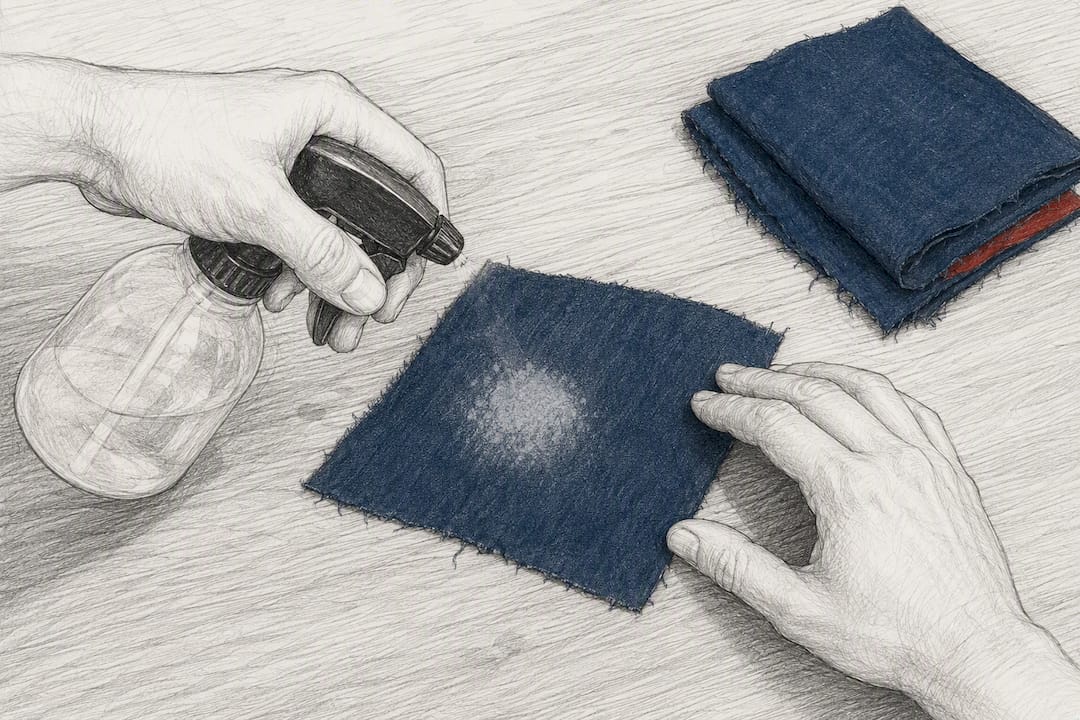
- Bleach distressing creates a faded, vintage flag look fast. Mix diluted bleach in a spray bottle, spray through a stencil outdoors, and rinse the shirt the moment the color lifts to your liking, before the fabric weakens.
- Screen printing is the move for bulk orders with one or two colors. Direct-to-garment (DTG) printing handles detailed, full-color designs like fireworks scenes or eagle portraits.
- Tie-dye works well as a base layer under a stenciled flag or star design for a festival-style shirt.
If you’re ordering custom shirts rather than making them, plan for at least two weeks of lead time before a holiday deadline. Rush production exists, but it usually costs more and raises the odds of a printing error.
Pro Tip: Test any new method, especially bleach distressing, on an old shirt or scrap fabric first. Bleach reacts differently depending on the exact cotton blend, and you don’t want your first test run to be the shirt you’re wearing tomorrow.
Personalizing a Patriotic Shirt for a Specific Person
Generic flag shirts are fine, but personalized ones get worn more, according to the identity-plus-patriotism approach Merch Titans documents across evergreen niches like veteran families and hometown pride.
- Last name plus year (“The Johnsons, Est. 2026”) for reunions
- Hometown state silhouette with a small star marking the actual city
- A service branch ribbon or unit number for a veteran in the family
- An inside joke or nickname worked into the slogan
Iron-on names and cut vinyl text are the cheapest personalization route. Embroidered patches and sewn-on appliques cost more but survive far more wash cycles. For typography, bold varsity block letters suit last names and years; script fonts work better for a softer phrase or a first name on a sleeve.
Wearing Patriotic Shirts All Year, Not Just on the Fourth
Scale is the biggest factor separating a “holiday costume” shirt from one you’ll wear in October. A small chest icon or sleeve mark reads as everyday style; a full-chest fireworks scene reads as event wear.
For everyday pairings, keep it simple: denim jeans or shorts, neutral sneakers, and a ball cap. A patriotic snapback or trucker-style hat rounds out a minimalist patch shirt without pushing the whole outfit into costume territory. 99designs’ guidance on t-shirt design puts it plainly: think about who’s actually wearing the shirt and where, or it ends up stuffed in a drawer after one wear.
Why Gulf of America’s Track Record Matters Here
Gulfofamerica is veteran-owned, backed by over 2,400 positive reviews, and offers a 30-day money-back guarantee on every order. That combination gives DIYers a quality benchmark to design toward and a low-risk way to buy finished accessories when a project runs short on time. If your homemade shirt needs a matching piece, browsing Gulf of America’s hat and apparel lineup shows what professionally finished patriotic gear looks like next to your own work.
How to Wash a DIY Patriotic Shirt Without Ruining It
The print method you choose determines how the shirt needs to be washed, and skipping this step is the fastest way to watch a good design crack, fade, or peel within a month.
Heat transfer vinyl (Cricut projects) needs 48 hours to fully cure before its first wash. After that, always wash inside out in cold water on a gentle cycle. Skip the dryer if you can; air-drying keeps the vinyl edges from lifting. If you must use the dryer, low heat only.
Fabric paint and stencil designs need roughly 24 to 72 hours of full cure time, depending on the paint brand, before any washing. Once cured, hand-wash or use a cold gentle machine cycle, and never scrub the painted area directly.
Bleach-distressed shirts need a thorough rinse right after the bleaching step to stop the chemical reaction, then a normal cold wash before wearing. Because bleach weakens cotton fibers slightly, wash these shirts less aggressively going forward, cold water, inside out, no bleach-based detergents.
Screen print and DTG shirts hold up best of the DIY methods but still benefit from inside-out washing and avoiding fabric softener, which breaks down ink adhesion over time.
A few habits protect any patriotic shirt regardless of method: wash inside out, use cold water, skip harsh detergents with optical brighteners (they can dull custom colors over time), and always air-dry or use low heat. Ironing directly over a printed or painted design, even on low, can melt vinyl or crack paint. Iron the shirt inside out, or place a thin cloth over the design first.
What Patriotic Shirt Supplies Actually Cost
DIY patriotic shirts are one of the more forgiving budget crafts, and most projects cost far less than ordering custom printed shirts in bulk.
A basic blank cotton t-shirt runs roughly $4 to $8 for budget bulk options and $10 to $15 for a premium ring-spun or cotton-blend tee. Fabric paint sets with several patriotic colors (red, white, blue, metallic gold) typically land in the $8 to $15 range for a project-sized set, and one set covers multiple shirts. Stencil sheets or reusable stencil material cost around $5 to $10, and you can reuse them for an entire batch of family shirts.
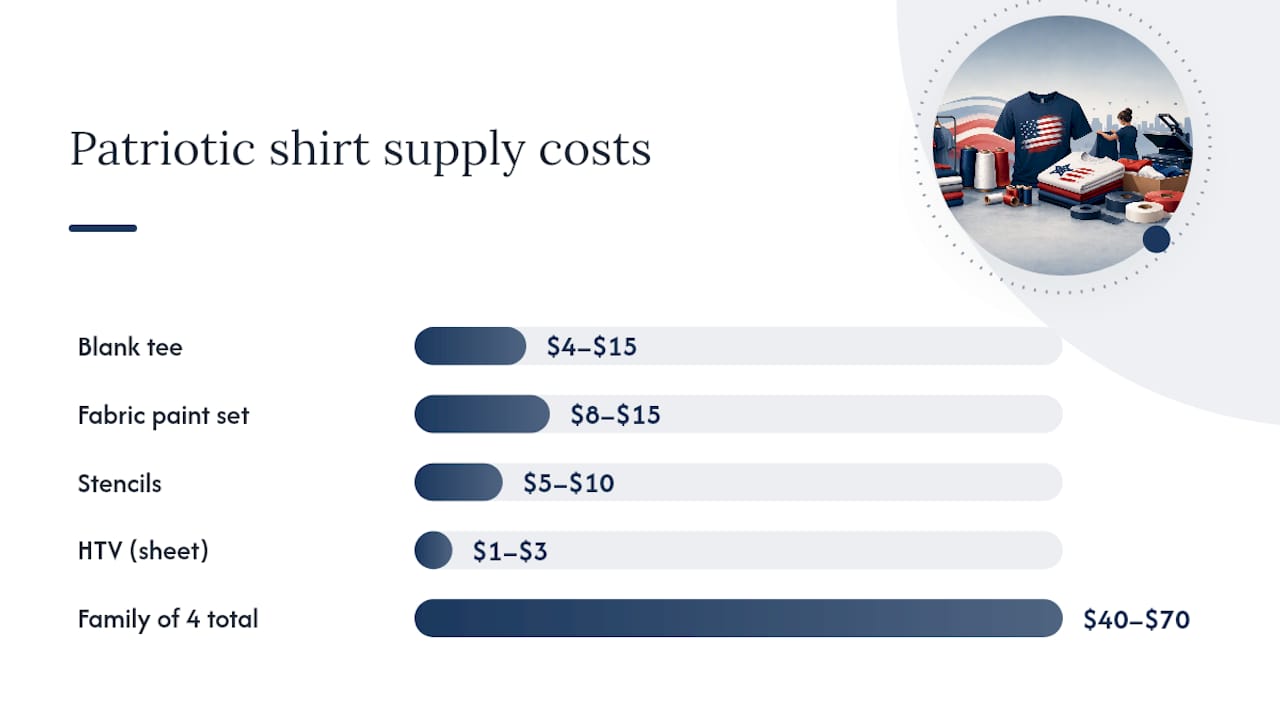
Heat transfer vinyl runs about $1 to $3 per sheet depending on color and finish, and a single sheet often covers two or three small designs. If you don’t already own a cutting machine, that’s the biggest upfront cost, entry-level Cricut machines start around $150 to $200, but the machine pays for itself quickly if you’re making shirts for more than one event a year. A basic household iron works fine for pressing HTV, so there’s no need for a heat press unless you’re producing shirts regularly.
Bleach distressing is the cheapest method on this list: a bottle of bleach and a spray bottle you likely already own. Total materials cost is often under $5 per shirt.
For a family of four making matching cookout shirts with stenciled flags, expect to spend somewhere between $40 and $70 total, blanks, paint, and stencils included, well under what four custom-printed shirts from a print shop would cost.
Sourcing Patriotic Patches, Buttons, and Paint
Craft stores like Joann and Michaels carry seasonal patriotic sections leading up to July, stocked with iron-on flag patches, star-shaped buttons, red-white-and-blue fabric paint sets, and grosgrain ribbon for trim work. These in-person stores are worth checking first since you can match colors and textures by hand before buying.
Online marketplaces like Etsy specialize in embroidered patches you won’t find at a big-box store, veteran unit patches, state-specific designs, and vintage-style eagle appliques among them. Amazon and general craft retailers carry basic bulk packs of stars, buttons, and iron-on lettering at lower per-unit costs, useful if you’re outfitting a large family group or a whole cookout crew.
For readers drawn to the profession and veteran-tribute category covered earlier, Modern Day Knight’s writing on patriotic values in apparel is worth a look. It digs into what “patriot” actually means in the context of veteran-owned fashion, useful context if you’re designing a tribute shirt and want the symbolism to feel earned rather than decorative.
When buying embellishments, check the care label against your shirt’s fabric. Metallic paints and sequin-style buttons often have lower heat tolerances than the fabric itself, so wash instructions should follow the embellishment’s limits, not the shirt’s.
A Few Things I’d Tell You Before You Buy a Single Yard of Vinyl
Most people overthink the design and underthink the fit between shirt and life. Before you cut, paint, or press anything, run through three questions: Who’s actually going to wear this? Where will they wear it, a parade, a desk job, a boat? And how will you realistically wash it? Answer those honestly and half your material choices make themselves.
The shirts that get worn past July are the ones tied to a real identity, a hometown, a service branch, a family name, not a generic flag slapped on cotton. Personalize it, and you’ve made something someone actually wants in their closet come October.
— Erik
Complete Your Look with Gulf of America Accessories
Not every patriotic outfit needs to start from a blank shirt and a bottle of bleach. When you’re short on time, shopping for someone else, or just want a coordinated look without firing up the Cricut, Gulfofamerica’s accessory lineup fills the gap fast.
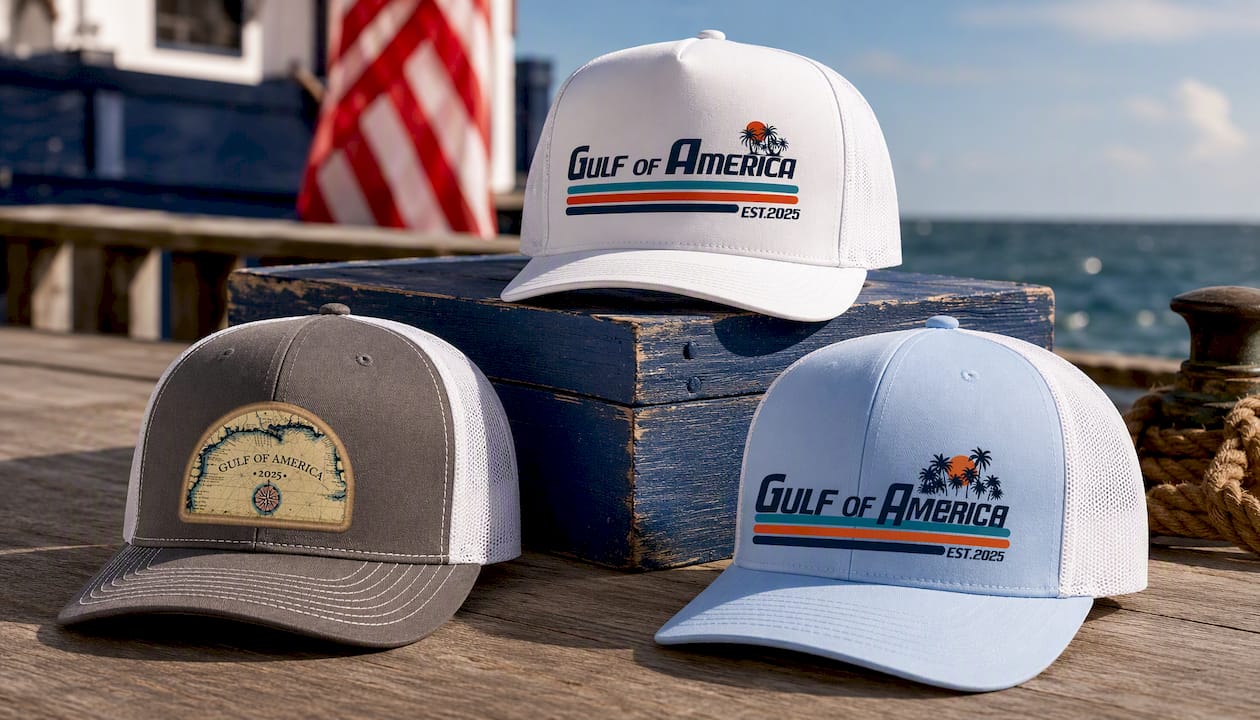
The Gulf of America Trucker Hat, Patriotic Snapback Baseball Cap pairs naturally with any of the minimalist chest-patch shirts covered earlier. If you want something with more texture, the Gulf of America Hat Embroidered Patch Mesh Back Trucker Hat brings the same embroidered detail work you’d want on a premium patch design, no sewing machine required. For a lifestyle option that leans warm-weather rather than strictly flag-forward, the Gulf of America Sunset Palm Trees Mens Embroidered Mesh Back Trucker Hat rounds out a cookout outfit without repeating the same red-white-and-blue motif twice.
Every order carries the same 30-day money-back guarantee backing the rest of Gulfofamerica’s catalog, so picking a hat to match your DIY shirt carries zero risk if the fit or style isn’t right. Browse the full lineup and grab a matching piece before your next cookout or parade.
Sources
- Fourth of July T-Shirt Ideas: America, Eagles, Fireworks & More | UberPrints
- Patriotic T-Shirt Designs for Print on Demand (2026) | Merch Titans | Merch Titans
- The 20 Best 4th of July Shirt Ideas | PeaPrint
- 7 Best 4th of July shirt ideas to sell in 2026 | Printify