

Flag Code Clothing: Legal in the U.S., Etiquette Still Matters
Wearing flag-themed clothing is legal in the United States, and so is wearing an actual flag as a garment. The Flag Code says the flag “should never be used as wearing apparel,” but that line carries zero legal weight. It’s etiquette guidance, not a criminal statute, and the First Amendment protects how Americans display and wear flag imagery.
TL;DR:
- Wearing flag-themed clothing with printed or embroidered designs is legal and widely accepted, while using actual flag fabric as clothing is discouraged but not punishable.
- Supreme Court rulings protect flag expression under the First Amendment, making any criminal prohibition on flag apparel unenforceable.
- The Flag Code’s suggestions, such as avoiding actual flags as clothing, are non-binding etiquette guidelines rather than enforceable laws.
- Retailers can legally sell flag-print apparel, provided they use printed or embroidered designs instead of real flag fabric.
- Proper disposal of worn-out fabric flags involves retirement ceremonies, but faded or torn clothing with flag imagery can be discarded as household waste or repurposed.
Table of Contents
- What Does the US Flag Code Say About Clothing?
- Does the First Amendment Protect Wearing the Flag?
- How Should You Wear Patriotic Clothing Respectfully?
- Can You Legally Sell Flag-Print Clothing?
- How Gulf of America Approaches Respectful Patriotic Design
- What Do You Do With a Worn-Out Flag Shirt?
- Why Etiquette, Not Law, Should Guide Your Choices
- Products to Consider for Respectful Patriotic Style
- Sources
- FAQ
What Does the US Flag Code Say About Clothing?
Title 4 of the U.S. Code, specifically 4 U.S.C. § 8, lays out the etiquette rules Congress adopted back in 1942. Three subsections matter most for anyone asking about flag code clothing:
- Subsection 8(d) states the flag “should never be used as wearing apparel, bedding, or drapery.”
- Subsection 8(i) discourages using the flag in advertising, saying it “should not be embroidered, printed, or otherwise impressed” on disposable items like napkins or boxes meant to be discarded.
- Subsection 8(j) advises against using the flag as part of a costume or athletic uniform, though it carves out an exception for flag patches on uniforms of military personnel, firefighters, police officers, and members of patriotic organizations.
Notice the word choice. Every one of these subsections says “should,” not “shall” or “must.” That’s the language of a suggestion, not a mandate. Congress wrote the Flag Code as a statement of respectful custom, not a criminal code with fines or jail time attached. There’s no enforcement section anywhere in Title 4 that punishes someone for wearing a flag T shirt or a flag bandana. The American Legion draws a similarly practical line: printed flag designs on clothing are broadly accepted, even while the organization encourages people not to wear an actual flag as a garment. If you want to read the government’s own version of the text, GovInfo’s reproduction of Title 4 is the official source.
Does the First Amendment Protect Wearing the Flag?
Yes, and two Supreme Court cases settled the question decades ago. In Texas v. Johnson (1989), the Court ruled that burning a flag as political protest is protected expression under the First Amendment. A year later, United States v. Eichman struck down the federal Flag Protection Act on the same grounds. Together, those rulings gutted state and federal attempts to criminalize what people do with a flag, including wearing it, altering it, or turning it into clothing.
That precedent explains why the Flag Code has no penalty clause today. Congress could not write an enforceable ban on flag-related expression even if it wanted to; the Supreme Court had already closed that door. Legal commentary from the Congressional Research Service describes the Code as advisory in nature, a set of etiquette norms rather than binding law. Some older statutes, including a District of Columbia provision cited occasionally in legal scholarship, technically still exist on paper. But according to vexillology experts at NAVA, that D.C. law is a historical relic with no modern enforcement behind it.
There are zero criminal penalties, fines, or jail sentences tied to wearing flag-themed apparel anywhere in current federal law. That’s not a loophole. It’s the settled, decades-old legal reality, confirmed repeatedly by courts and reinforced in legal explainer coverage of the topic.
How Should You Wear Patriotic Clothing Respectfully?
Legal and respectful aren’t always the same thing, and most people asking about flag etiquette on clothing actually want to know how to avoid looking careless rather than how to avoid a citation that doesn’t exist. The consensus among veteran organizations and flag experts comes down to a simple distinction: printed designs are fine, actual flag fabric is where etiquette gets touchy.
- Do wear shirts, hats, and jackets printed with a flag motif for holidays, sporting events, or everyday patriotic pride.
- Do wear an official flag lapel pin on your collar or jacket. It’s one of the most universally accepted forms of flag display.
- Don’t cut up an actual cloth flag to sew into a jacket or costume. That crosses from imagery into repurposing the object itself, which the Code specifically discourages.
- Don’t let a flag touch the ground while changing clothes or during a costume malfunction at an event. That’s an etiquette lapse people notice.
- Do reserve real flags for ceremonial display, hanging, or draping over a casket, not casual wear.
Pro Tip: If you’re hosting an event and want red, white, and blue everywhere, use printed bunting and decorations instead of actual flags. Bunting is designed for decorative use and sidesteps every etiquette question about repurposing a real flag as costume material.
Can You Legally Sell Flag-Print Clothing?
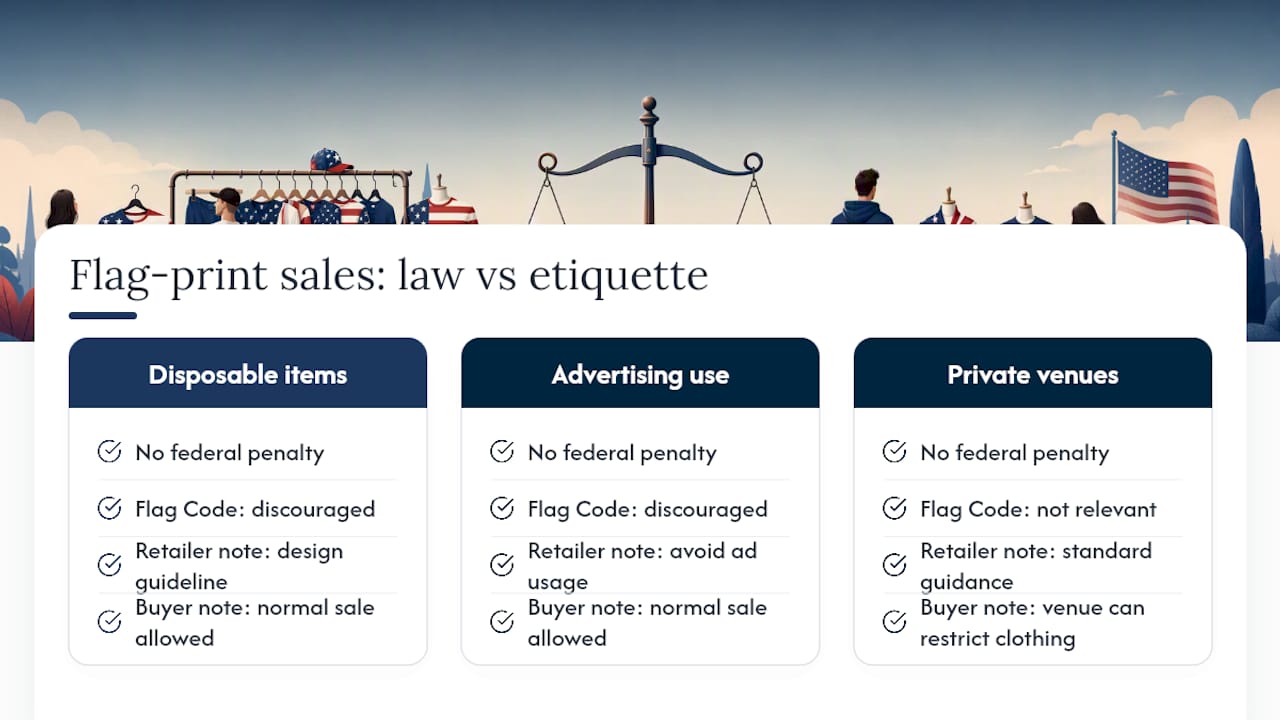
Selling and buying commercially produced flag-print apparel is completely lawful. Retailers across the country manufacture and sell flag T-shirts, hats, and accessories every Fourth of July without any legal exposure, and buyers can purchase them without worrying about violating federal law.
The Flag Code does flag two areas worth a retailer’s attention, even though neither carries legal teeth: using flag imagery on disposable items meant to be thrown away, and using the flag in ways that could be seen as commercial advertising rather than patriotic expression. Neither triggers a penalty, but thoughtful retailers treat them as design guidelines. On the buyer side, remember that private venues can set their own dress codes independent of federal law. A stadium or workplace can restrict clothing on private property even though no statute bans flag apparel in public.
How Gulf of America Approaches Respectful Patriotic Design
The brand emphasizes veteran ownership as part of its identity and offers a 30-day money-back guarantee on its apparel, supported by many positive customer reviews indicating consistent quality.
On the design side, Gulf of America follows a straightforward internal checklist: never construct a garment from actual flag fabric, always favor printed or embroidered flag imagery instead, and build every piece from durable materials meant to hold up through repeated wear rather than fall apart after a season. That approach keeps the product line squarely in the category the American Legion and NAVA both describe as widely accepted: representations of the flag on clothing, not the flag itself repurposed as a garment.
What Do You Do With a Worn-Out Flag Shirt?
A flag T-shirt that’s faded, torn, or stretched out doesn’t require the ceremonial retirement process reserved for an actual cloth flag. The Flag Code’s disposal guidance, including the tradition of burning a flag in a dignified ceremony, applies to physical flags, not to shirts, hats, or jackets printed with a flag design.
That said, plenty of patriotic customers feel uneasy just tossing a flag-printed garment in the regular trash alongside food waste and packaging. A reasonable middle ground: cut the garment down for use as a cleaning rag if the design has faded past recognition, or simply discard it in household trash once you no longer consider the image identifiable as a flag. If the item is still wearable but you’re done with it, donating it keeps it in circulation rather than in a landfill.
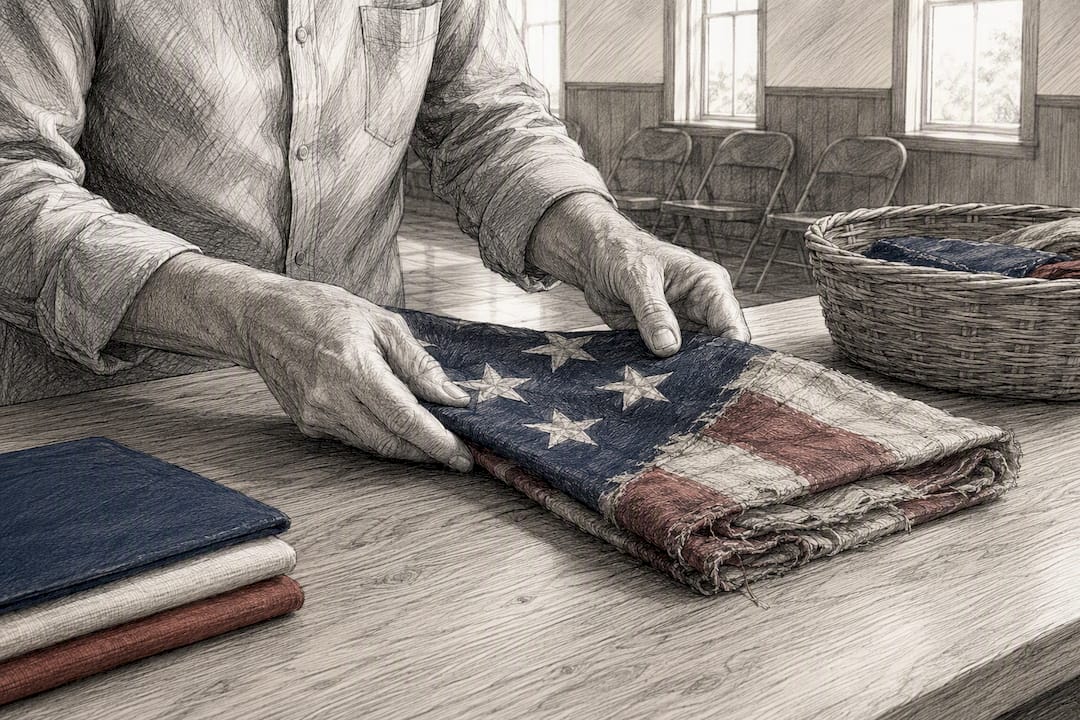
The one item that does call for a specific process is an actual cloth flag, the kind flown on a pole outside a house. When a real flag becomes tattered, worn thin, or faded beyond repair, groups like the American Legion and local VFW posts hold flag retirement ceremonies, typically involving a respectful burning. Many fire departments and scouting organizations also collect flags for retirement year round. That process is specifically for the object, not for a printed representation of it on fabric.
Why Etiquette, Not Law, Should Guide Your Choices
The gap between what the Flag Code says and what the law actually enforces is the single most misunderstood part of this topic. People treat “should never” as though it carries the same weight as a criminal statute, and it doesn’t. Once you separate etiquette from enforcement, the anxiety around flag code clothing mostly evaporates.
Where I think the conventional advice falls short is in treating the Flag Code as a rulebook to be followed line by line, rather than what it actually is: a snapshot of mid-century civic manners that Congress itself chose not to back with penalties. That distinction isn’t a loophole to exploit. It’s a reason to focus your energy on the etiquette questions that actually matter, like whether you’re repurposing an actual flag into a costume, rather than worrying whether a printed flag hoodie will get you in trouble. It won’t.
What should guide your choices instead is respect for the object itself, not fear of a law that doesn’t exist. Buy from brands that treat the distinction seriously, wear the imagery proudly, and save real flags for real ceremonial use.
— Erik
Products to Consider for Respectful Patriotic Style
If you want flag-inspired gear that sidesteps every etiquette gray area, look for pieces built around printed or embroidered designs rather than actual flag fabric. That’s the guiding principle behind Gulf of America’s hat lineup.
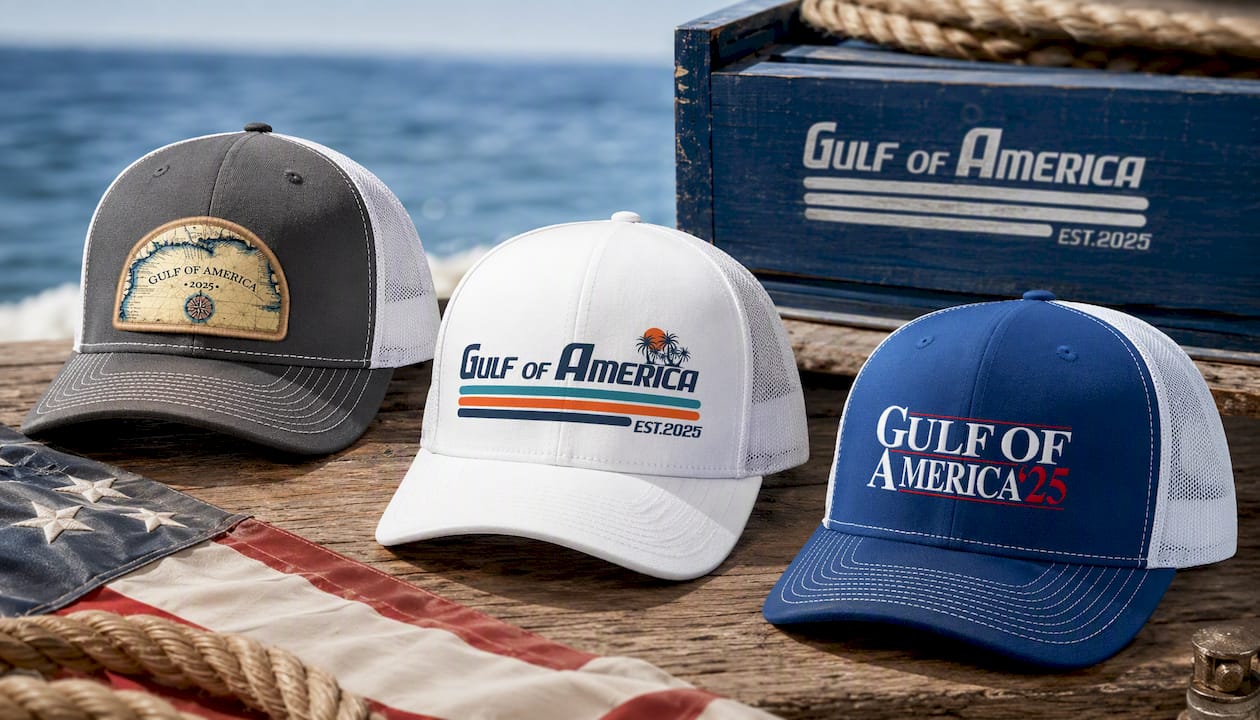
The Gulf of America Hat Embroidered Patch Mesh Back Trucker Hat uses an embroidered patch rather than flag fabric, making it a solid everyday option for anyone who wants patriotic style without any etiquette ambiguity. The Gulf of America Trucker Hat Patriotic Snapback leans into a bold printed design built for daily wear at the ballpark, the beach, or the backyard grill. For something with a more contemporary edge, the Gulf of America Mens Mesh Back Trucker Hat rounds out the lineup with a breathable mesh build suited for warm-weather wear.
Every purchase comes with a money-back guarantee, and the brand has built a customer base with numerous positive reviews. Browse the full Gulf of America catalog to see the current lineup, or if you’re outfitting a team or event, a partner resource like custom feather flags covers larger-scale patriotic display needs beyond apparel.
Sources
- 4 U.S. Code § 8 - Respect for flag
- U.S. Flag Code: Display, Respect & Proper Use | The American Legion
- CRS legal summary on flag law and protocols
- FQ&A—Flag Etiquette and Protocol - North American Vexillological Association
FAQ
Why Are People Wearing American Flag Shirts Today?
Flag-print apparel spikes around Independence Day, Memorial Day, and major sporting events because it’s a low-effort way to show patriotic pride, and it carries no legal risk. Printed flag designs on clothing are widely accepted by veteran organizations, including the American Legion.
Where Can I Find the US Flag Code?
The full text lives in 4 U.S. Code § 8, also mirrored on GovInfo’s Title 4 page. Both are official government sources with the exact statutory language.
Can You Sell a Shirt With the American Flag on It?
Yes, selling and buying commercially produced flag-print clothing is completely legal in the United States. Retailers like Gulf of America manufacture flag-themed hats and apparel using printed and embroidered designs rather than actual flag fabric, which keeps products in the widely accepted category described by etiquette groups like NAVA.
Does the Constitution Say You Can’t Wear the Flag?
No, the opposite is true. The Supreme Court’s rulings in Texas v. Johnson and United States v. Eichman established that flag-related expression, including wearing it, is protected under the First Amendment, and no federal law criminalizes flag apparel.
Is It Disrespectful to Wear the American Flag?
Wearing printed flag designs is broadly considered acceptable and even patriotic by groups like the American Legion. What etiquette guidance discourages is repurposing an actual cloth flag into a garment, since the Flag Code specifically calls that use inappropriate, even though it carries no penalty.