

Why U.S. Challenge Coins Matter: 1.5–2 Inches of History, Use, and Value
A challenge coin is a small medallion, usually stamped with a unit insignia or motto, given to mark membership, recognition, or a shared achievement. It works as a portable piece of identity: carry it, and you’re proving you belong. Beyond that core purpose, the exact rules shift from unit to unit, agency to agency, and even coin to coin. There’s no single rulebook, just a tradition that everyone adapts to fit their own group.
TL;DR:
- Challenge coins are personalized symbols of membership, recognition, or achievement, with sizes typically ranging from 1.5 to 2 inches and made from various metals.
- Their origin stories are often legendary, with their primary purpose being to boost morale and foster loyalty within military and other organizations.
- Military usage includes giving coins after missions, ceremonies, or as informal awards, with coin checks serving as social rituals lacking a single, official set of rules.
- Civilian and official entities, like police, fire departments, and clubs, now widely use challenge coins for recognition, status, and memorabilia collecting.
- The value of a challenge coin to collectors depends on its rarity, provenance, materials, and unique features such as serial numbers or custom finishes.
Table of Contents
- What Is a Challenge Coin, and What Does It Symbolize?
- Where Did Challenge Coins Come From?
- How the Military Uses Challenge Coins and What They Mean
- How Coin Checks Work (and Why Nobody Agrees on the Rules)
- Beyond the Military: Police, Agencies, and Civilian Collectors
- What Makes a Challenge Coin Valuable to Collectors
- Caring for, Storing, and Displaying Your Coins
- Why Gulf of America Covers This Tradition
- Why This Tradition Refuses to Fade
- Carry the Pride Beyond the Coin
- Sources
What Is a Challenge Coin, and What Does It Symbolize?
Most challenge coins run 1.5 to 2 inches across, roughly the size of a large cookie, and typically weigh enough to feel substantial in your palm. The U.S. Army’s own feature on the tradition confirms that size range and describes coins as custom medallions carrying an organization’s insignia, made to be handed out as tokens of membership or morale.
Material choice says a lot about a coin’s intended weight, both literal and figurative. Cheaper runs use zinc alloy with a plating; higher-end coins go with brass, bronze, copper, or nickel silver, sometimes finished in soft or hard enamel color. Some commands commission coins that go well beyond a flat disc.
- Standard round medallions with a raised (3D) insignia on one side and a unit motto or crest on the other
- Dog-tag-shaped coins that double as a nod to service member identification
- Bottle-opener coins with a functional edge built into the design
- Multi-tool coins that fold out a screwdriver or wrench
- Cutout or shield-shaped coins that break from the round format entirely
What all of that variety signals is consistent even when the shape isn’t. A coin says: you were here, you did this, you’re one of us. It can mark a deployment, a promotion, a retirement, or simply a commander’s personal thanks. Some coins exist purely to commemorate an event, like a change-of-command ceremony or a base’s anniversary. Others function as a working credential you’re expected to carry, ready to produce the moment someone calls for one.
Where Did Challenge Coins Come From?
Historians who’ve dug into the practice generally agree on one thing: the popular origin stories are more legend than documented fact. The New York Times has reported that these tales function as cultural narratives that reinforce morale and institutional identity, regardless of whether they hold up to scrutiny.
The most repeated version traces the tradition to a World War I flying squadron, where an officer supposedly had bronze medallions struck for his unit. One pilot, shot down over Germany and captured, escaped with only his uniform and the coin in a pouch around his neck. French soldiers who found him suspected he was a spy until he produced the medallion, which one Frenchman recognized. That single coin, the story goes, saved his life.
A second strand of lore pushes the practice back further, or forward, depending on which version you hear:
- Pre-WWI unit tokens and mess coins circulated informally among some military groups, more novelty than ceremony.
- The WWII era popularized “coin checks” among pilots and unit members, partly as a drinking-game ritual and partly as a way to prove you belonged when meeting strangers from other outfits.
- Special Forces units in Vietnam and later the Green Berets are widely credited with formalizing the modern challenge coin as a unit-pride object, distinct from a mess token or novelty piece.
- Coins spread across Army, Navy, Air Force, Marine Corps, and Coast Guard units through the 1980s and 1990s, each branch adapting its own designs and customs.
- By the Gulf War and War on Terror era, personalized command coins had become standard practice at nearly every level of leadership.
None of that timeline is airtight, and that’s the honest answer. What’s verifiable is the function these objects have always served: building allegiance and morale inside a group, whether the founding story is precise history or not.
How the Military Uses Challenge Coins and What They Mean
Inside the military, a coin shows up in a handful of recurring moments. A commander might hand one out after a successful mission, during a retirement ceremony, or on the spot to recognize a job well done that doesn’t rise to the level of a formal medal. Visiting dignitaries and senior officers often exchange personal coins as a form of professional courtesy, a practice documented in photographed exchanges from official visits, including presidential ones.
Several patterns show up across units and branches:
- Personal commander’s coins, distinct from unit coins, are often reserved for the commanding officer to give directly.
- Many units keep a fixed print run and track how many coins remain, treating a limited supply as part of the coin’s value.
- Coins commemorating a specific deployment or operation tend to circulate only among the people who were actually there.
- Some coins are struck for a single event and never reordered once the run is gone.
Commanders often treat a coin they personally issue as a tangible on-the-spot award, something closer in emotional weight to a handshake and a certificate combined than to a piece of currency. The Army’s own writing on the subject backs this up directly, describing coins as physical tokens of appreciation that commanders use precisely because they carry more personal meaning than paperwork. The Wounded Warrior Project has noted that receiving a coin from a commander often lands with more emotional weight than a formal certificate, because it’s small enough to carry every day and personal enough to remember who handed it over.
That’s the real symbolism underneath all the metal: recognition you can hold onto.
How Coin Checks Work (and Why Nobody Agrees on the Rules)
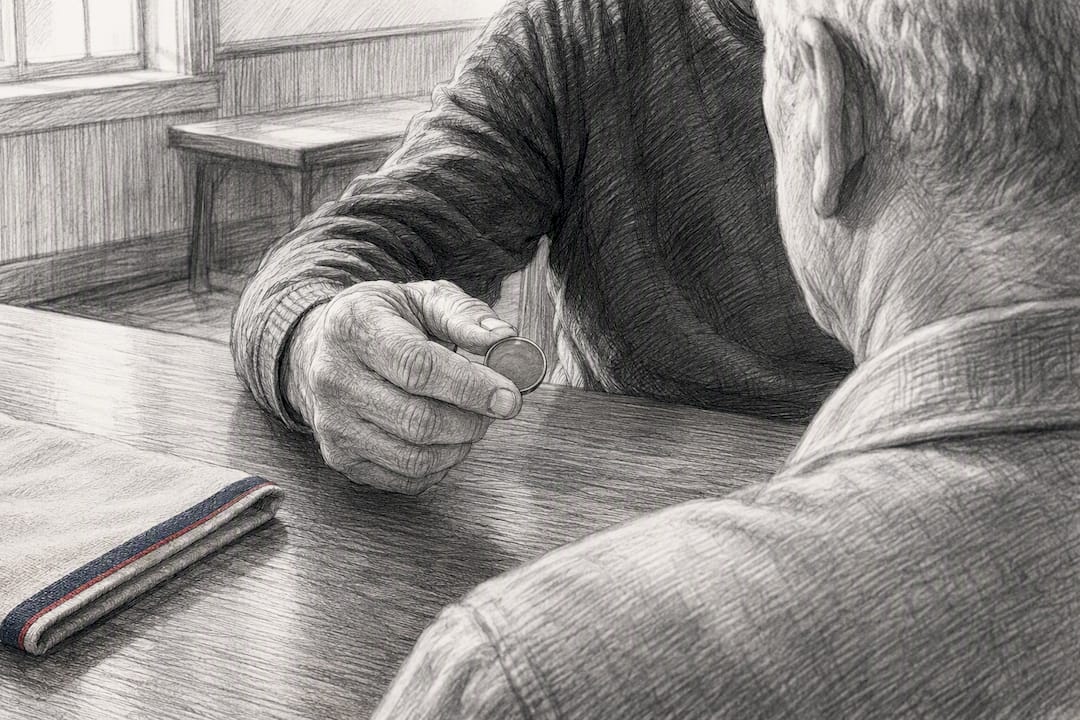
A “coin check” is the ritual that gives challenge coins their name. Someone slaps their coin on the bar or table, or simply calls out “coin check,” and everyone within earshot is expected to produce their own coin within seconds. Whoever can’t buys the next round. That’s the shorthand version, and it holds up across most tellings of the tradition.
What doesn’t hold up is any claim that there’s one official version of the rules. We Are The Mighty’s history of the tradition makes clear there’s no universal military regulation governing coin checks. Some units only play the game in social settings like a bar or a unit function. Others run it constantly, at any moment, anywhere, specifically because the surprise factor is the point.
- The person calling the check usually has to produce their own coin first, or it doesn’t count.
- A photocopy, photo, or borrowed coin typically doesn’t satisfy the challenge.
- Losers conventionally buy a round of drinks, though some units substitute pushups or another minor penalty.
- A coin that’s been drilled, defaced, or turned into jewelry is often considered invalid for a check, since altering a coin can strip it of its intended purpose.
Pro Tip: Carry your coin somewhere consistent, a specific pocket or a small pouch, so you’re never fumbling during an actual check. Veterans who take the tradition seriously treat that split second of hesitation as part of the fun, but you don’t want to lose a round just because you can’t find your own pocket.
Beyond the Military: Police, Agencies, and Civilian Collectors
Challenge coins stopped being a strictly military object decades ago. The Wounded Warrior Project confirms that police departments, fire departments, federal and state agencies, and civilian organizations all use the same basic format now, often for the same reasons the military does: recognition, morale, and a physical marker of shared identity.
Common civilian and official uses include:
- Police and fire departments issuing coins for academy graduations, retirements, or line-of-duty commendations
- Federal agencies producing coins for interagency task forces or major operations
- Universities, fraternal organizations, and hobbyist clubs striking coins as membership tokens
- Corporate and nonprofit groups using coins as fundraising items or VIP gifts at events
Anyone can own or carry one. You don’t need service history to collect coins as exonumia, the broader hobby of collecting coin-like objects that aren’t official currency. That open door is a big part of why the secondhand market for challenge coins has grown well past its military roots.
What Makes a Challenge Coin Valuable to Collectors
Serialization is the single biggest factor separating a mass-produced novelty from a genuine collector’s item. A coin numbered “47 of 200” carries a scarcity story a generic bulk order never will. We Are The Mighty notes that serialized numbering, specialized materials, and distinctive finishes are what push a coin past simple commemorative status into genuine collector territory.
A few things collectors watch for:
- Limited production runs tied to a specific deployment, operation, or historic event
- Provenance: who owned it, who issued it, and whether that chain can be documented
- Unusual materials, like sterling silver or gold plating, instead of standard zinc alloy
- 3D relief work, cutout designs, or multi-function builds like an integrated bottle opener or tool
Provenance documentation matters more than most new collectors expect. A coin with a clear paper trail, who received it, when, and why, holds up far better at appraisal than one with an interesting story nobody can verify.
Caring for, Storing, and Displaying Your Coins
If you’re carrying a coin daily, keep it in a dedicated pocket or a small coin pouch rather than loose in a bag where keys and change can scratch the finish. Some units genuinely expect members to carry their coin at all times, since a coin’s readiness for a check is part of the point.
- Wipe metal coins with a soft, dry cloth; skip abrasive polishes on enamel or plated finishes, since they can strip the color right off.
- Store valuable or vintage coins in individual capsules rather than tossing them together, where they can scratch each other.
- Display collections in a coin rack, shadow box, or framed case, especially for pieces tied to a specific event or person.
- Photograph and log serial numbers or provenance details before a coin ever leaves your hands, particularly if you’re planning to sell or gift it.
Collectors sourcing distinctive keepsakes for a display case often browse broader memorabilia resources, like this roundup of Colorado memorabilia gift ideas, for inspiration on how to pair coins with other commemorative pieces.
Why Gulf of America Covers This Tradition
This piece comes from Gulf of America, a veteran-owned platform built around premium patriotic apparel crafted for comfort and everyday durability. Writing about challenge coins isn’t a stretch for a brand rooted in honoring service. It’s the same instinct: giving people a tangible way to mark pride, memory, and belonging.
Gulf of America backs every order with a 30-day money-back guarantee and has built a following of over 2,400 positive reviews from customers who value both the product quality and the mission behind it. That track record matters here because trust in who’s telling this story should count for something. This article was written by Erik, covering veteran affairs and patriotic culture for the brand.
Why This Tradition Refuses to Fade
The origin stories will probably never get fully sorted out, and honestly, I think that’s fine. A slightly mythologized founding legend doesn’t weaken a tradition; it gives it texture. What people actually respond to isn’t the WWI pilot story checking out historically. It’s the fact that a coin, unlike a certificate stuffed in a drawer, lives in your pocket where you can feel it.
Commemorative objects, whether a coin, a patch, or a well-made hat, do something paperwork can’t. They keep memory physically present in daily life, which is exactly how cultural continuity survives generation to generation.
— Erik
Carry the Pride Beyond the Coin
A challenge coin marks a moment. The right apparel keeps that pride visible every day, which makes a well-made hat a natural companion gift alongside a coin, whether you’re honoring a veteran’s service or marking your own connection to that tradition. The Gulf of America Hat Embroidered Patch Mesh Back Trucker Hat pairs the same spirit of recognition with premium materials built for daily wear.
Backed by a 30-day money-back guarantee and a mission rooted in supporting veterans, the platform makes it easy to add a meaningful piece to a commemorative gift without guessing on quality. Browse the current hat styles and pick the one that fits the story you’re honoring.
Sources
- Challenge coins: more than just metal | Article | The United States Army
- The tradition and history of the military Challenge Coin | We Are The Mighty
- History, Purpose, and Impact of Challenge Coins | Wounded Warrior Project
- Morale, allegiance and drinking: How military challenge coins evolved and spread | The New York Times
- President Obama gives a challenge coin (White House archives)