

30 Days Start at Purchase: How US Money Back Guarantees Meet FTC Rules
A 30-day money-back guarantee means the seller promises a full or partial refund if you ask for one within 30 days, as long as you meet the policy’s stated conditions. That’s the whole deal in one sentence, but the fine print matters. Shipping costs are often excluded, renewed subscriptions usually aren’t covered, and the clock often starts on the purchase date rather than delivery. Before you do anything else, pull up the seller’s actual refund terms and locate your order ID.
TL;DR:
- Most guarantees start from the purchase date, so shipping delays can significantly shorten the actual refund window.
- Refunds typically exclude shipping costs, and some sellers apply restocking fees or restrict refunds to first-time buyers only.
- Proof of purchase, such as an order ID or confirmation email, is almost always required, and opened consumables usually cannot be returned.
- Digital products and subscriptions often have stricter refund conditions, with no refunds on used or activated items and limited initial purchase windows.
- Filing a complaint is feasible if sellers refuse to honor clearly advertised guarantees, as FTC rules enforce refund promises once conditions are met.
Table of Contents
- What Does a 30-Day Money-Back Guarantee Actually Cover?
- What Disqualifies You From Getting a Refund?
- How Do You Request a Refund Step by Step?
- When Does the 30-Day Clock Actually Start?
- Are Money-Back Guarantees Legally Binding?
- How Do Refund Rules Differ by Product Type?
- Why Reading the Fine Print Still Matters Most
- Shop Confidently With a Guarantee That Actually Pays Out
- Sources
- FAQ
What Does a 30-Day Money-Back Guarantee Actually Cover?
A refund, a return, and store credit are three different outcomes, and sellers don’t always volunteer which one you’re getting until you ask. A refund puts money back on your card. A return might just swap the item for another size or color. Store credit locks your money inside that seller’s ecosystem, which is a much worse deal if you never plan to shop there again.
Most 30-day guarantees promise to refund the product’s price, but shipping charges frequently stay off the table. That’s not a loophole. It’s standard enough that supplement companies like Onnit spell it out directly: their 30-day money-back guarantee covers product cost but not the shipping you paid to get it.
Beyond that baseline, sellers build in their own variations:
- First-purchase-only refunds. Some brands guarantee your first order but not repeat purchases, on the theory that a satisfied customer doesn’t need the safety net twice.
- “Keep it” refunds. A handful of supplement and consumable sellers refund your money without asking for the product back, since reselling an opened bottle isn’t realistic anyway.
- Digital purchase variations. Software and digital goods often carry shorter windows or require proof the product was never downloaded or activated.
None of these variations are universal. Read the actual policy page for the item you bought, not a general assumption about how “money-back guarantees” work.
What Disqualifies You From Getting a Refund?
Sellers almost always require proof of purchase. That means your order ID, a receipt, or a confirmation email, so hold onto whatever the confirmation page or email gave you the moment you buy something.
Beyond proof of purchase, a few exclusions show up across nearly every industry:
- Personalized or custom-made items, since they can’t be resold to anyone else.
- Opened consumables like supplements, cosmetics, or food products in some categories.
- Used or altered products that show signs of wear beyond simple inspection.
- Final-sale or clearance items marked as non-refundable at checkout.
Shipping fees are the most common partial exclusion. Even when a seller refunds the full product price, the amount you paid to have it shipped to you rarely comes back. Some sellers also apply a restocking fee, typically a percentage of the item’s price, when a product is returned opened or used. Ask directly whether a restocking fee applies before you send anything back. It changes what you’ll actually receive.
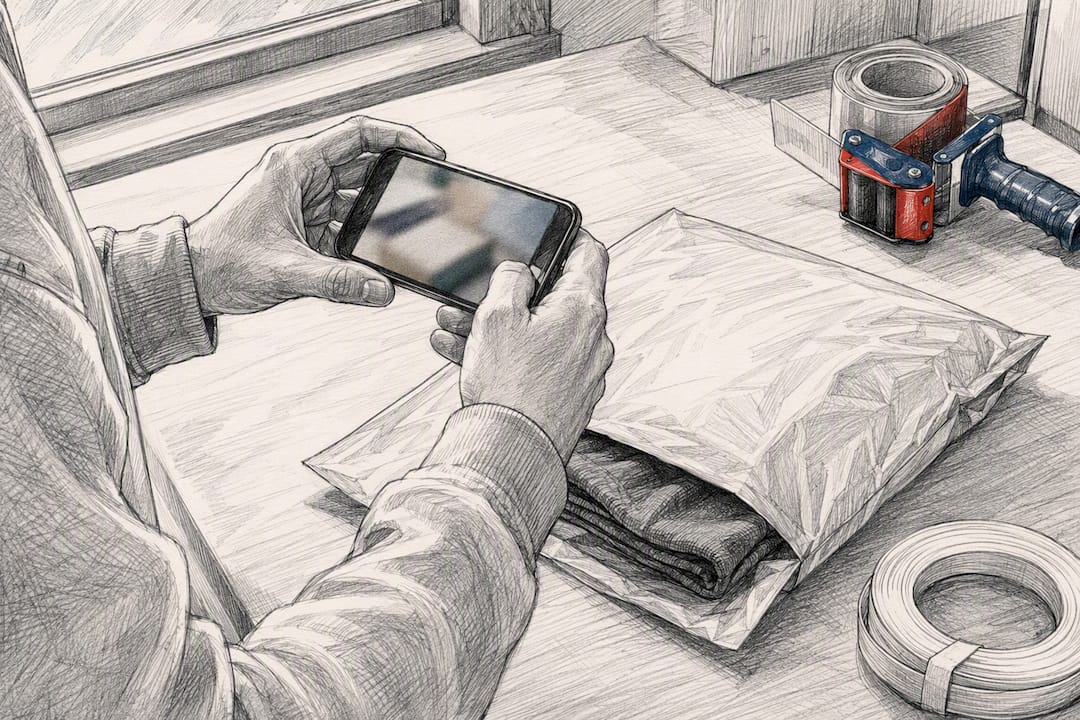
Pro Tip: Photograph the item and its packaging before you ship it back. If a dispute over “condition” comes up later, you’ll have proof of what you actually sent.
How Do You Request a Refund Step by Step?
Getting a refund approved comes down to documentation and timing, not persistence alone. Work through these steps in order:
- Confirm your deadline. Check the seller’s policy for exactly when the 30-day window starts, since that date isn’t always the day you clicked “buy.”
- Gather your proof. Collect the order ID, payment confirmation, product photos if there’s damage, and original packaging if the policy requires it.
- Pick your contact channel. Use the seller’s support portal, email, or live chat, and keep a copy of every message with a timestamp.
- Submit a clear, written request. Reference the specific guarantee you’re invoking and state plainly that you want a refund, not store credit or an exchange.
- If denied, ask why in writing. A vague “not eligible” answer isn’t good enough. Request the specific policy clause they’re citing.
- Escalate if needed. Ask for a supervisor or account manager, and if the seller still doesn’t honor an advertised guarantee, a card issuer chargeback or an FTC complaint are real options.
Keeping written records isn’t just good practice. The FTC’s own guidance for handling advertised guarantees treats a seller’s refusal to honor disclosed terms as potentially actionable, which means your email trail is the evidence that makes a complaint worth filing.
When Does the 30-Day Clock Actually Start?
Most guarantees start counting from the purchase date, not the day your package shows up. That surprises a lot of people, and it’s worth confirming before you assume you have more time than you do. Guarantee windows commonly run 30 to 90 days, and unless the seller explicitly states that delivery starts the clock, the purchase date rules.
Slow shipping can quietly eat into your window. If an order takes two weeks to arrive and the guarantee runs from purchase, you’ve already used almost half your refund period before the product reached your door. Contact the seller directly if shipping delays cut into your time. Some will extend the window; many won’t unless you ask.
Subscriptions add another wrinkle. A 30-day guarantee on a subscription service generally covers the initial charge only. Renewals happening automatically after the first month usually aren’t refundable under the same guarantee.
Are Money-Back Guarantees Legally Binding?
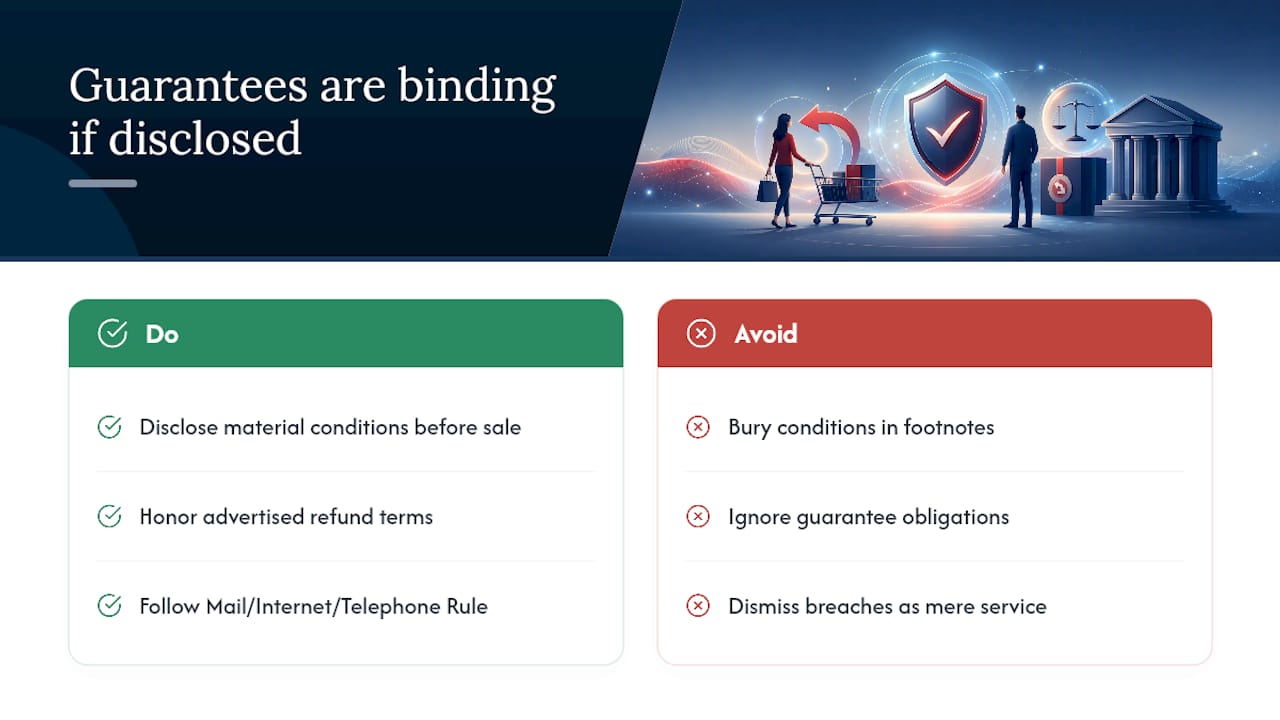
Yes, under specific conditions. The FTC’s Guides for the Advertising of Warranties and Guarantees, found at 16 CFR Part 239, require sellers to disclose material conditions clearly and conspicuously before the sale happens, not buried in a footnote after checkout.
When a seller advertises a satisfaction guarantee or money-back guarantee, the FTC expects that seller to refund the purchase price when the customer meets the stated conditions. Failing to honor a guarantee that was clearly advertised can expose a business to enforcement action.
That’s not a minor technicality. A publicly advertised guarantee functions as a promise the seller made to get your business, and the FTC treats breaking that promise as a real consumer protection issue, not just a customer service failure.
A few other rules stack on top of the core guarantee. The Mail, Internet, or Telephone Order Rule sets expectations around shipping timelines for online purchases. Card network rules also shape how refunds get processed once a chargeback enters the picture. And if a cooling-off period applies to your specific type of purchase, the FTC’s guidance on buyer’s remorse explains when you get an automatic right to cancel versus when you’re relying on the seller’s own guarantee terms. If a seller won’t honor a guarantee you qualified for, filing a complaint with the FTC or disputing the charge with your card issuer are both legitimate next steps.
How Do Refund Rules Differ by Product Type?
Physical goods, consumables, and digital products don’t get treated the same way, and knowing which category you’re in tells you what to expect before you even ask.
- Physical goods like clothing and hardware typically allow full returns within the window, though shipping refunds vary by seller and original packaging is often required.
- Consumables and supplements split into two camps: some brands offer “keep it” refunds for first-time buyers as a trust-building move, while others exclude opened products from returns entirely.
- Digital goods and subscriptions hinge on access and delivery. If you never received a working download link or activation code, that’s a stronger refund case than simply changing your mind after using the product.
- Marketplace purchases run on different rules than a direct seller guarantee. Programs like eBay’s Money Back Guarantee apply automatically to eligible listings, sometimes covering original shipping in ways an individual seller’s policy wouldn’t.
Subscription services add their own layer. Support pages for services like NordVPN spell out that refund eligibility often narrows to the initial purchase window, not every renewal that follows.
Why Reading the Fine Print Still Matters Most
Many people skip reading the refund policy until they need it, although reviewing it beforehand is important. A guarantee is a contract you agreed to the moment you clicked “buy,” and the details you skipped over are the ones that decide whether you get your money back.
What surprises readers most isn’t that exclusions exist. It’s how often a guarantee gets marketed as unconditional when the actual terms carry real limits, shipping exclusions, first-purchase-only clauses, condition requirements. That gap between the pitch and the fine print is where most refund disputes start.
Some sellers build their guarantees to close that gap rather than exploit it. Many have positive customer reviews supporting their reputation, the kind of track record that only holds up when a business actually pays out the refunds it promises. If you’re buying, keep your order ID and confirmation email the moment checkout finishes.
— Erik
Shop Confidently With a Guarantee That Actually Pays Out
Some sellers back their orders with straightforward 30-day money-back guarantees, no fine print designed to trip you up, no shipping-cost sleight of hand buried three pages deep. That’s the real difference: a guarantee built to be used, not one built to look good in an ad.
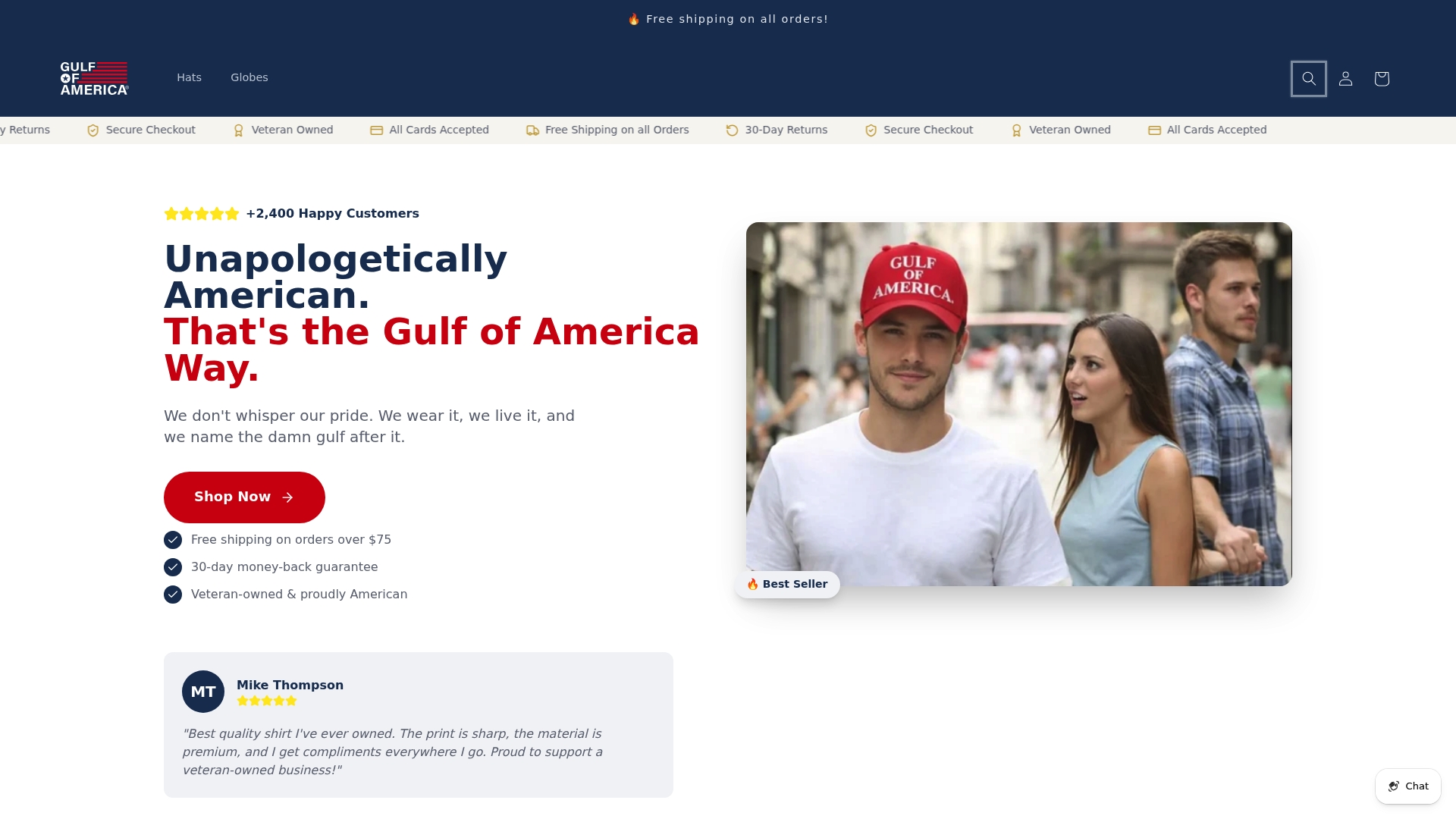
Two of the most requested items in the catalog, the Gulf of America Hat Embroidered Patch Mesh Back Trucker Hat and the Gulf of America Trucker Hat, Patriotic Snapback Baseball Cap, are both covered under that same guarantee, along with every shirt and collectible on the site. Veteran-owned, built on premium materials, and backed by a promise the company actually keeps: that’s the combination Gulf of America is betting you’ll notice.
Save your order confirmation email the moment you buy. If anything about your purchase doesn’t sit right within 30 days, that confirmation is all you need to start the conversation. Browse the full Gulf of America catalog and pick your gear knowing the guarantee has your back.
Sources
- 30 Day Money Back Guarantee — Onnit help center
- 16 CFR Part 239 – Guides for the Advertising of Warranties and Guarantees — eCFR
- Businesspersons’ Guide to Federal Warranty Law — FTC
- What does a money-back guarantee mean? — LegalClarity
FAQ
What Does a 30-Day Money-Back Guarantee Mean?
It means the seller promises to refund your purchase if you request it within 30 days and meet the policy’s conditions, such as returning the item unused or providing proof of purchase. The exact refund amount, and whether shipping is included, depends entirely on that seller’s stated terms.
Can I Still Get a Refund After 30 Days?
Usually not under the guarantee itself, since most guarantees run for a fixed window that starts on the purchase date unless the seller states otherwise. You can still ask, since some sellers make exceptions for defective products or shipping delays outside your control.
Can I Still Return an Item After 30 Days?
A return outside the guarantee window depends on the seller’s separate return policy, which is often more flexible than the refund guarantee. Some sellers accept late returns for store credit or exchange even when a cash refund is off the table.
Are Money-Back Guarantees Legally Binding?
Yes. Under FTC guidance, an advertised guarantee creates a binding promise once the consumer meets the disclosed conditions, and failing to honor it can be actionable. If a seller refuses a refund you’re entitled to, a card issuer chargeback or an FTC complaint are both real paths forward.
Does Gulf of America Offer a Money-Back Guarantee?
Some sellers offer a 30-day money-back guarantee on purchases, including hats, shirts, and collectibles. Keep your order confirmation handy so the refund process moves quickly if you ever need it.